


This website shows how we could have better government, and better MPs, |
||||||||||||||||||||||||||||||||||||||||||||||
|---|---|---|---|---|---|---|---|---|---|---|---|---|---|---|---|---|---|---|---|---|---|---|---|---|---|---|---|---|---|---|---|---|---|---|---|---|---|---|---|---|---|---|---|---|---|---|
| Change the General Election voting system | ||||||||||||||||||||||||||||||||||||||||||||||
| Our ‘Winner takes all’ voting system means small changes in votes cast cause disproportionate policy shifts. So we get desperate, divisive, short term thinking, and a ‘winner take all’ approach to using power. | ||||||||||||||||||||||||||||||||||||||||||||||
| Get rid of 'First Past the Post'. It's not working. Choose DPR Voting | ||||||||||||||||||||||||||||||||||||||||||||||
| 1 Are parties fairly represented in parliament? NO! In our recent General Election .... Party A (spoiler alert - Lib Dems) got 3.7m votes. Those 3.7m votes elected 11 MPs ....... Party B (spoiler alert - SNP) got 1.2m votes. Those 1.2m votes elected 48 MPs ....... Bonkers? maybe. Fair? No. |
||||||||||||||||||||||||||||||||||||||||||||||
2 Does it matter who we elect as MPs? .. YES!Not all MPs are equally hard working.. effective.. sympathetic.. in touch..
At present you only have one vote so most people vote for their party's candidate - the party recommendation. |
||||||||||||||||||||||||||||||||||||||||||||||
Why don't we change the voting system? |
||||||||||||||||||||||||||||||||||||||||||||||
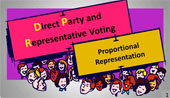
.. Direct Party and Representative Voting .. |
||||||||||||||||||||||||||||||||||||||||||||||
| All MPs are directly elected in single member constituencies | ||||||||||||||||||||||||||||||||||||||||||||||
| (No party lists) | ||||||||||||||||||||||||||||||||||||||||||||||
| You can vote for your MP. You can vote for your party | ||||||||||||||||||||||||||||||||||||||||||||||
| (With DPR Voting you can have two separate votes) | ||||||||||||||||||||||||||||||||||||||||||||||
. The voter has two ballot papers - one to elect the MP, and one to vote for a party. It is an easy system for the voter. No compulsion - you need not vote on both papers. It would be simple and cheap to introduce. Elect MPs on personal merit, not party label ... but still support your chosen party. Every vote counts. There are no safe party seats .... but good MPs have safer seats. |
||||||||||||||||||||||||||||||||||||||||||||||
One MP in each constituency |
- for local, personal, accountable politics |
|||||||||||||||||||||||||||||||||||||||||||||
Simple and quick voting, counting we all understand |
- for transparency and clarity |
|||||||||||||||||||||||||||||||||||||||||||||
Party Proportional voting |
- for a fairer balance in politics |
|||||||||||||||||||||||||||||||||||||||||||||
Every vote in every constituency counts |
- for everybody to re-engage with politics |
|||||||||||||||||||||||||||||||||||||||||||||
|
||||||||||||||||||||||||||||||||||||||||||||||
| from Arend Lijphart, Professor Emeritus of Political Science, University of California, San Diego ( Nov 2011) | ||||||||||||||||||||||||||||||||||||||||||||||
| Thank you for bringing the DPR Voting system to my attention. I had not heard of it before.
I agree with you that it represents a big improvement compared with the current FPTP system in the UK, because it is basically a PR instead of a majoritarian system. My own preference is for straightforward list PR, but the practical advantage of DPR Voting may be that it may be more acceptable to the British public. Good luck with your proposal! Arend. |
||||||||||||||||||||||||||||||||||||||||||||||
| Does it matter to you which MP you elect? Or do you only vote for the party? Does the best candidate get elected? Should independent candidates have a better chance? see a Short Description see more about DPR Voting (2) see here |
||||||||||||||||||||||||||||||||||||||||||||||
Direct Party and Representative Voting (DPR)
Direct Party and Representative Voting (DPR Voting)

DPR Voting - simple practical electoral reform
 |
 |
 |
 |
 |
 |
 |
 |